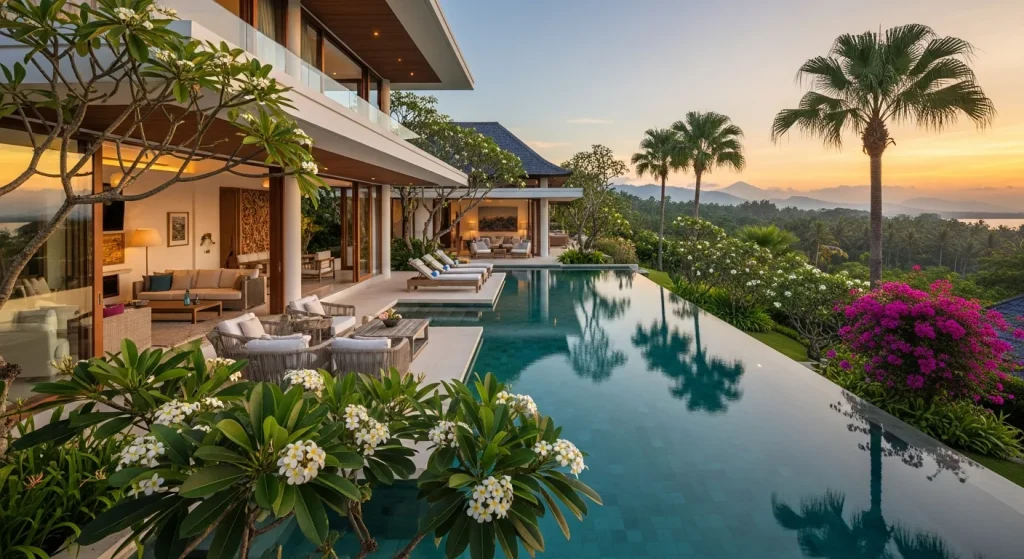
Sumba is establishing itself as Indonesia’s next frontier for sustainable luxury and eco-investment, attracting capital from Bali’s mature market. In 2026–2027, investors are increasingly focusing on eco-resorts, boutique villas, and land banking opportunities in West/Southwest Sumba, with East Sumba offering longer-term growth potential.
Sumba Eco Investment Cost Breakdown 2027: From $30K Bungalow to $150K Boutique Villa
Sumba is emerging as Indonesia’s next sustainable luxury and eco-investment frontier, with a small but rapidly growing market that sits downstream of Bali’s mature tourism and real estate ecosystem. In 2026–2027, capital is shifting from saturated Bali toward eco-resorts, boutique villas, and land banking in Sumba, especially in West/Southwest Sumba, with East Sumba positioned as a longer-horizon growth engine. This briefing provides a structured market overview and investment cost breakdown tailored to Sumba eco investment within the broader Indonesia and Bali context.
1. Market Size & Growth (2026–2027)
There is no single official “Sumba eco-investment” market size figure, but multiple indicators show early-stage, high-growth dynamics:
Indonesia Tourism & Investment Baseline
- Indonesia’s total investment (domestic + foreign) reached IDR 892.4 trillion in Jan–Sep 2022 across all sectors.
- Tourism and hospitality are priority sectors under national and regional development plans, with dedicated incentives for sustainable projects.
Shift of Capital from Bali to Sumba/Lombok
- As of 2026, foreign investors are increasingly allocating capital toward emerging regions east of Bali—notably Lombok and Sumba—driven by cost advantages, growing infrastructure, and shifting tourism demand.
- Sumba is described as an “emerging luxury investment zone for 2026” and a strategic alternative to both Bali and Lombok.
Growth Drivers Specific to Sumba
- Improved flight access (daily flights Bali–Tambolaka), upgraded infrastructure in West Sumba, and new eco-resorts and boutique villa developments over the past five years.
- Sumba is rapidly gaining attention as Indonesia’s next major destination for tourism, hospitality, and eco‑investments, with high-potential opportunities in sustainable tourism, real estate, and agriculture.
Given its frontier status, most of Sumba’s tourism/real estate capital volume is still modest compared with Bali, but growth rates are high because:
- Land prices are far below Bali/Lombok yet appreciating steadily, especially in West/Southwest Sumba.
- Global eco-tourism trends favour destinations with strong environmental and cultural preservation commitments.
- Government support for sustainable development aligns with investor interest in impact investing.
2027 Note on Infrastructure Development
By 2027, ongoing infrastructure upgrades, particularly in road networks connecting key tourist areas in West Sumba and enhanced power grid stability, are expected to further reduce operational costs for new developments and improve accessibility for visitors, directly impacting investment viability and property valuations.
2. Investment Avenues & Cost Breakdown (Approximate Ranges)
Investment opportunities in Sumba primarily fall into three categories: land banking, eco-bungalow developments, and boutique villa projects. The following cost breakdown provides approximate ranges for 2027, noting that actual costs will vary based on location, materials, design, and regulatory compliance.
Land Banking
Land acquisition is the foundational investment in Sumba. Prices vary significantly by location, proximity to infrastructure, and development potential.
- West Sumba / Southwest Sumba (Coastal & Near-Coastal): IDR 50 million to IDR 200 million per are (100 sqm). Prime beachfront plots can exceed this range.
- East Sumba (Longer-Term Growth): IDR 10 million to IDR 50 million per are. Lower prices reflect earlier stage development and infrastructure.
- Due Diligence & Legal Fees: Approximately 5% to 10% of the land value, covering surveys, legal reviews, and transfer taxes.
Total initial investment for a 1-hectare (100 are) plot in a developing area of West Sumba could range from IDR 5 billion to IDR 20 billion ($320,000 to $1.28 million USD, assuming IDR 15,600/USD), plus legal fees.
Eco-Bungalow Developments (Approximate Cost: $30,000 – $70,000 USD per unit)
These are typically smaller, sustainable accommodations designed for eco-conscious travellers. Costs include construction, basic furnishing, and site preparation.
- Land Preparation: IDR 10 million to IDR 30 million per bungalow (levelling, basic utilities access).
- Foundation & Structure: IDR 50 million to IDR 100 million (concrete slab, timber or bamboo frame).
- Walls & Roofing: IDR 40 million to IDR 80 million (local timber, bamboo, alang-alang thatched roof).
- Finishing (Flooring, Bathroom, Basic Kitchenette): IDR 30 million to IDR 60 million.
- Utilities (Solar Power, Water Harvesting, Septic Tank): IDR 20 million to IDR 50 million per unit (essential for eco-focus).
- Furnishing & Decor: IDR 15 million to IDR 30 million (locally sourced, sustainable materials).
- Permits & Fees: IDR 5 million to IDR 15 million.
A single eco-bungalow, excluding land cost, could range from approximately IDR 470 million to IDR 1.09 billion ($30,000 to $70,000 USD).
Boutique Villa Projects (Approximate Cost: $100,000 – $250,000+ USD per unit)
These are larger, more luxurious properties offering enhanced amenities and a higher standard of finish. Costs are highly variable based on size, design complexity, and material choices.
- Land Preparation: IDR 30 million to IDR 80 million per villa.
- Foundation & Structure: IDR 150 million to IDR 300 million (reinforced concrete, premium timber).
- Walls & Roofing: IDR 100 million to IDR 250 million (high-quality local stone, timber, premium roofing materials).
- Finishing (Flooring, Multiple Bathrooms, Full Kitchen, Built-in Wardrobes): IDR 100 million to IDR 250 million.
- Utilities (Advanced Solar Systems, Water Treatment, High-Capacity Septic): IDR 50 million to IDR 150 million.
- Swimming Pool & Deck: IDR 80 million to IDR 200 million.
- Landscaping & Outdoor Features: IDR 40 million to IDR 100 million.
- High-End Furnishing & Decor: IDR 50 million to IDR 150 million.
- Permits & Fees: IDR 15 million to IDR 40 million.
A boutique villa project, excluding land, could range from approximately IDR 1.56 billion to IDR 3.9 billion ($100,000 to $250,000+ USD). Larger, more custom designs will exceed this upper bound.
3. Operational & Holding Costs
Beyond initial investment, investors must account for ongoing operational and holding costs.
- Property Management: 15% to 25% of gross rental income for professional management services.
- Maintenance & Repairs: Approximately 1% to 2% of property value per annum.
- Utilities (Backup Power, Water, Internet): Variable, depending on consumption and reliance on grid vs. off-grid systems.
- Staffing (Cleaners, Gardeners, Security): IDR 2 million to IDR 4 million per staff member per month, depending on role and experience.
- Annual Property Tax (PBB): Typically low in Sumba, calculated based on property value, but can increase with development.
- Insurance: Variable, recommended for fire, natural disaster, and liability.
4. Regulatory Landscape
Navigating Indonesian property law requires local expertise. Key considerations include:
- Right to Use (Hak Pakai): Available to foreign individuals and entities, often for a term of 25-30 years, extendable.
- Right to Build (Hak Guna Bangunan – HGB): Available to Indonesian entities and foreign-owned companies (PT PMA), allowing construction and ownership of buildings on state or private land, typically for 30 years, extendable.
- Leasehold Agreements: Common for foreign investors, offering long-term leases (up to 25-30 years, extendable) on private land.
- Environmental Impact Assessment (AMDAL): Required for larger developments, ensuring adherence to sustainable practices.
- Building Permits (IMB): Mandatory for all construction, requiring approved architectural plans.
Working with a reputable local advisory firm is crucial for compliance and to mitigate legal risks.
5. Comparative Investment Table (Approximate 2027)
| Investment Type | Approximate Capital Outlay (USD) | Key Advantages | Key Considerations |
|---|---|---|---|
| Land Banking | $320,000 – $1.28 million+ (1 hectare) | Capital appreciation, low holding costs, flexibility for future development. | Illiquidity, long-term horizon, due diligence complexity. |
| Eco-Bungalow (per unit) | $30,000 – $70,000 (excluding land) | Lower entry cost, high demand from eco-tourists, quicker ROI potential. | Smaller scale, potentially lower per-unit rental income. |
| Boutique Villa (per unit) | $100,000 – $250,000+ (excluding land) | Higher rental yield, luxury market appeal, greater capital appreciation. | Higher capital outlay, longer construction time, more complex management. |
6. Sumba’s Competitive Advantage
Sumba’s appeal as an investment destination stems from several factors:
- Sustainable Development Focus: Alignment with global eco-tourism trends and impact investing.
- Undersupplied Market: Significant demand for quality accommodation and experiences with limited current supply.
- Appreciating Asset Values: Land and property values are appreciating steadily as infrastructure improves and awareness grows.
- Cultural Authenticity: Offers a distinct cultural experience, differentiating it from more commercialised destinations.
- Government Support: National and regional plans prioritise sustainable tourism and investment in Sumba.
Sumba presents a compelling opportunity for investors seeking exposure to Indonesia’s next growth frontier in sustainable luxury and eco-tourism. A clear understanding of market dynamics, cost structures, and regulatory requirements is essential for successful deployment of capital.
For a detailed discussion on Sumba investment opportunities and to navigate the local market effectively, book an investment consultation on WhatsApp with Sumba Eco Investment.