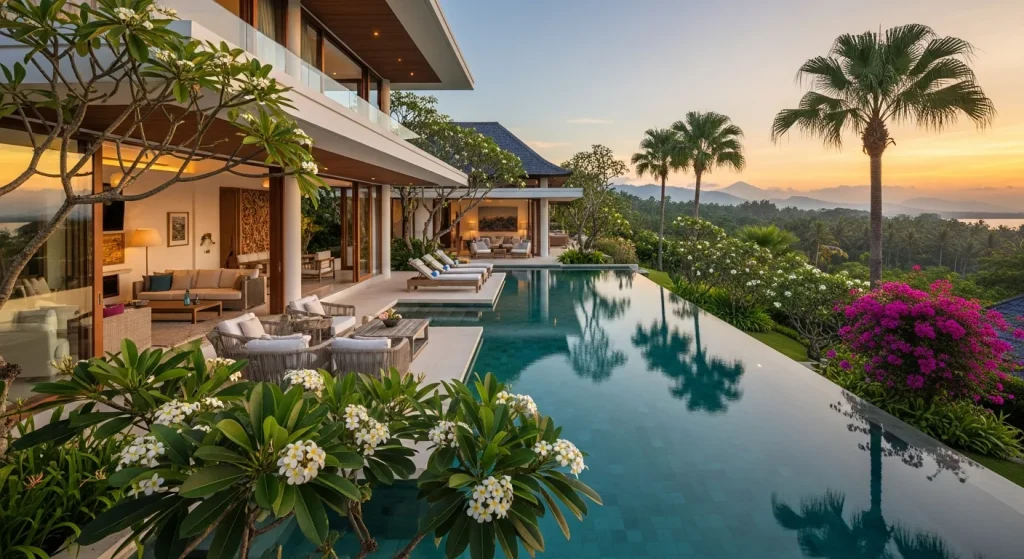
Sumba is establishing itself as Indonesia’s next sustainable luxury and eco-investment frontier, with a growing market downstream of Bali. For 2027, capital is shifting from saturated Bali towards eco-resorts, boutique villas, and land banking in Sumba, particularly in West/Southwest Sumba, with East Sumba positioned for longer-term growth.
Comparing Beachfront vs. Off-Plan Eco-Estate Investments in Sumba for 2027: Value, Risk, and Growth
As Sumba emerges as Indonesia’s next sustainable luxury and eco-investment frontier, investors are evaluating opportunities across various asset classes. The 2026–2027 period shows a clear shift of capital from Bali towards eco-resorts, boutique villas, and land banking in Sumba. This analysis compares beachfront properties with off-plan eco-estate investments, focusing on value, risk, and growth potential for a discerning investor audience.
Market Context: Sumba’s Ascent
Indonesia’s total investment (domestic + foreign) reached IDR 892.4 trillion in January–September 2022 across all sectors. Tourism and hospitality are priority sectors, with dedicated incentives for sustainable projects. As of 2026, foreign investors are increasingly allocating capital towards emerging regions east of Bali, specifically Lombok and Sumba, driven by cost advantages, growing infrastructure, and shifting tourism demand. Sumba is identified as an “emerging luxury investment zone for 2026” and a strategic alternative to both Bali and Lombok.
Growth drivers specific to Sumba include improved flight access (daily flights Bali–Tambolaka), upgraded infrastructure in West Sumba, and new eco-resorts and boutique villa developments over the past five years. Sumba is rapidly gaining attention as Indonesia’s next major destination for sustainable tourism, real estate, and agriculture. While Sumba’s current capital volume in tourism/real estate is modest compared to Bali, growth rates are high. Land prices are significantly below Bali/Lombok yet are appreciating steadily, particularly in West/Southwest Sumba.
Beachfront Property Investments in Sumba
Beachfront properties in Sumba offer direct access to coastal amenities, which typically commands a premium. These assets often appeal to investors seeking immediate operational potential for luxury villa rentals or boutique resort development, leveraging Sumba’s growing reputation for sustainable luxury tourism.
Value Proposition of Beachfront
- Premium Pricing: Beachfront land in established or developing zones of West/Southwest Sumba typically carries a higher per-square-meter price compared to inland or off-plan eco-estate plots. This premium reflects scarcity and direct amenity access.
- Established Appeal: The allure of direct ocean access for high-net-worth individuals and luxury tourists is consistent. This can translate to strong rental yields and resale values, provided the property is developed to a high standard.
- Immediate Utilisation: With existing beachfront land, development can commence more rapidly, potentially shortening the time to revenue generation.
Risks Associated with Beachfront
- Environmental Vulnerability: Coastal erosion, rising sea levels, and extreme weather events pose long-term risks, particularly in areas not adequately protected or where local regulations regarding setbacks are not rigorously enforced.
- Regulatory Complexity: Developing beachfront property often involves stricter environmental impact assessments and compliance with coastal zone management regulations, which can add time and cost to projects.
- Higher Capital Outlay: The initial investment for beachfront land is generally higher, requiring more substantial upfront capital.
- Limited Supply: Genuine beachfront parcels, especially those suitable for high-end development, are finite and increasingly scarce, driving up acquisition costs.
Off-Plan Eco-Estate Investments in Sumba
Off-plan eco-estate investments typically involve purchasing plots within a master-planned development focused on sustainability, often located inland but with access to shared amenities or views. These investments are attractive for their growth potential and alignment with Sumba’s sustainable development ethos.
Value Proposition of Off-Plan Eco-Estates
- Attractive Entry Prices: Off-plan plots generally offer lower entry prices per square meter compared to prime beachfront land. This allows for greater capital appreciation as the estate develops and infrastructure matures.
- Managed Development: Eco-estates benefit from master planning, ensuring cohesive design, shared infrastructure (roads, utilities, security), and adherence to sustainability standards. This reduces individual investor burden on infrastructure development.
- Sustainability Premium: Aligning with Sumba’s vision as a sustainable luxury destination, eco-estates can attract a specific buyer segment willing to pay a premium for environmentally conscious living and design.
- Community and Amenities: Many eco-estates plan for shared amenities such as wellness centres, organic farms, and communal spaces, enhancing lifestyle and rental appeal.
Risks Associated with Off-Plan Eco-Estates
- Development Risk: The primary risk is the successful completion of the master-planned estate. Delays in infrastructure, amenities, or overall project delivery can impact timelines and investor returns. Due diligence on the developer’s track record and financial stability is crucial.
- Longer Time Horizon: Returns from off-plan investments generally materialise over a longer period as the estate develops and appreciation occurs.
- Market Perception: While Sumba’s market is growing, the perception and liquidity for off-plan eco-estate plots might be less immediate than for established beachfront properties until the estate gains traction.
- Location Dependency: The success of an off-plan eco-estate heavily depends on its specific location, accessibility, and the developer’s ability to create a desirable environment that integrates with the natural surroundings.
2027 Note: By 2027, with continued infrastructure improvements in West Sumba and the operationalisation of new eco-resorts, the valuation gap between select off-plan eco-estate plots and established beachfront properties is projected to narrow as demand for sustainable integrated developments increases.
Comparative Analysis for 2027
For investors considering Sumba in 2027, the choice between beachfront and off-plan eco-estate investments hinges on risk appetite, capital allocation, and desired investment horizon.
| Feature | Beachfront Investment | Off-Plan Eco-Estate Investment |
|---|---|---|
| Initial Capital Outlay | Higher | Lower to Moderate |
| Time to Revenue | Potentially Shorter | Longer (dependent on estate development) |
| Risk Profile | Environmental (coastal), Regulatory, High Cost | Development (project completion), Market Acceptance |
| Growth Potential | Steady appreciation due to scarcity and premium appeal | Potentially higher capital appreciation from lower base, driven by estate development and sustainability premium |
| Sustainability Focus | Can be integrated, but individual effort required | Inherent in master plan, shared infrastructure |
| Liquidity | Generally strong for prime assets | Dependent on estate maturity and market perception |
| Market Demand (2027) | Consistent for luxury tourism/private use | Increasing, driven by eco-conscious investors/buyers |
Strategic Considerations for Sumba Investors
Diversification
For a balanced portfolio, investors might consider a blend of both beachfront and off-plan eco-estate holdings. Beachfront offers immediate appeal and established demand, while off-plan eco-estates provide exposure to high-growth potential in Sumba’s emerging sustainable luxury market.
Due Diligence
Thorough due diligence is paramount for both investment types. For beachfront, this includes comprehensive environmental assessments, title verification, and understanding local building codes. For off-plan eco-estates, it involves evaluating the developer’s track record, financial stability, master plan viability, and the legal framework governing the estate.
Long-Term Vision
Sumba is a long-term play. While growth rates are high, the market is still developing. Investors should align their strategies with Sumba’s trajectory as Indonesia’s next sustainable luxury and eco-investment frontier, understanding that substantial returns often require patience.
Conclusion
Both beachfront and off-plan eco-estate investments in Sumba present compelling opportunities for 2027. Beachfront properties offer established value and immediate luxury appeal, albeit with higher initial costs and environmental considerations. Off-plan eco-estates provide an entry point into Sumba’s sustainable future with potentially higher capital appreciation, contingent on successful project development and a longer investment horizon. The optimal choice depends on an investor’s specific objectives, risk tolerance, and capital allocation strategy within Sumba’s rapidly evolving market.
For further insights and tailored investment advice on Sumba’s property market, book an investment consultation on WhatsApp with Sumba Eco Investment.