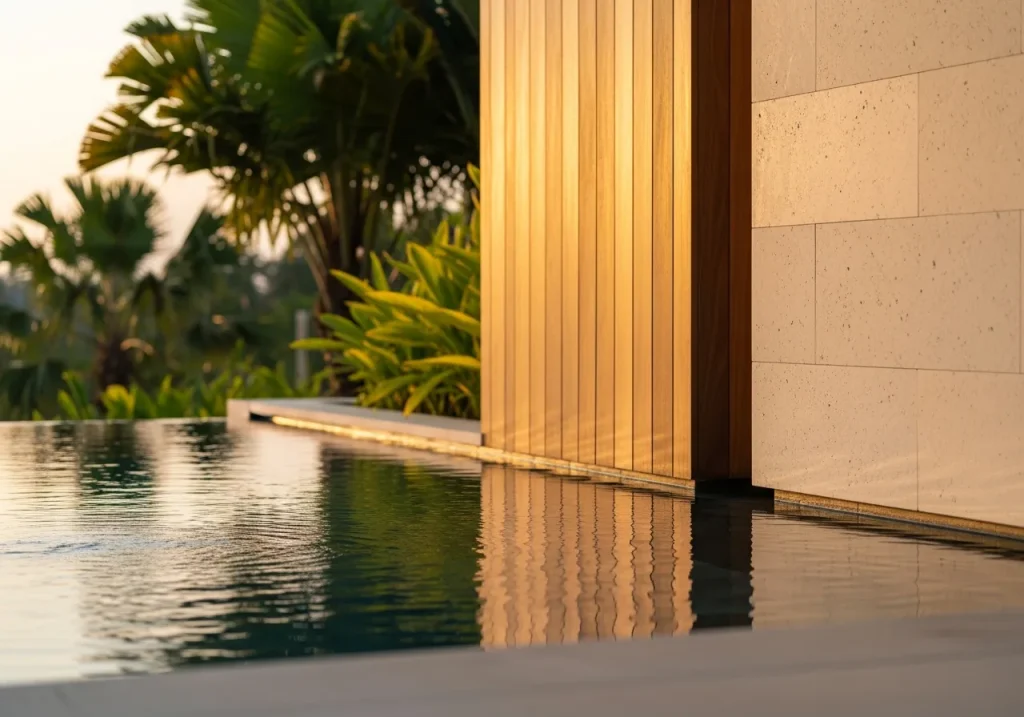
Sumba is establishing itself as Indonesia’s next frontier for sustainable luxury and eco-investment, attracting capital downstream from Bali’s established tourism and real estate market. The period 2026–2027 sees a strategic shift towards eco-resorts, boutique villas, and land banking in West and Southwest Sumba.
Cheapest and Most Expensive Eco-Building Options in Sumba for 2027: A Detailed Cost Analysis
Sumba, as Indonesia’s emerging sustainable luxury and eco-investment frontier, presents distinct opportunities for discerning investors. The market, while smaller than Bali’s, demonstrates rapid growth, particularly in eco-resorts, boutique villas, and land banking. This analysis focuses on the cheapest and most expensive eco-building options available in Sumba for 2027, providing a detailed cost breakdown relevant to investors, family offices, HNW buyers, and funds.
As of 2026–2027, capital is increasingly shifting from saturated Bali towards emerging regions like Sumba, driven by more favourable cost structures, improving infrastructure, and evolving tourism demand. Sumba is specifically identified as an ’emerging luxury investment zone for 2026′, offering a strategic alternative to established markets.
Sumba’s Investment Landscape: 2026–2027 Context
While a precise ‘Sumba eco-investment’ market size figure is unavailable, several indicators point to early-stage, high-growth dynamics. Indonesia’s total investment reached IDR 892.4 trillion in January–September 2022 across all sectors, with tourism and hospitality designated as priority sectors receiving dedicated incentives for sustainable projects. Foreign investors are increasingly allocating capital towards regions east of Bali, including Sumba, due to cost advantages and growing infrastructure.
Improved flight access (daily Bali–Tambolaka flights), upgraded infrastructure in West Sumba, and the development of new eco-resorts and boutique villas over the past five years are significant growth drivers. Sumba is gaining attention as a major destination for sustainable tourism, real estate, and agriculture. Land prices, while appreciating steadily, remain significantly below those in Bali and Lombok, particularly in West and Southwest Sumba.
2027 Note:
For 2027, the emphasis on regulatory support for sustainable projects is expected to solidify further, with potential new local government incentives specifically targeting eco-friendly construction methods and materials to support Sumba’s sustainable development goals.
Defining ‘Eco-Building’ in the Sumba Context
In Sumba, eco-building typically refers to construction practices that minimise environmental impact, utilise local and sustainable materials, and incorporate passive design principles for energy efficiency. This includes using natural ventilation, rainwater harvesting, solar power, and locally sourced timber, bamboo, and stone. The aim is to create structures that integrate harmoniously with the natural landscape and support local economies.
Cheapest Eco-Building Options for 2027
The most cost-effective eco-building options in Sumba leverage readily available local materials and traditional construction techniques, adapted for modern comfort and durability.
Traditional Sumba-Inspired Structures (Lumbung Style)
These structures, often featuring high-pitched roofs made from alang-alang (thatch) and walls from local timber or bamboo, represent the lowest entry point for eco-conscious construction. They are inherently sustainable due to material sourcing and natural ventilation.
- Materials: Locally harvested timber (e.g., teak from sustainable plantations, coconut wood), bamboo, alang-alang thatch, river stones for foundations.
- Construction: Primarily manual labour, utilising traditional carpentry and weaving techniques. Minimal reliance on heavy machinery.
- Energy & Water: Passive cooling, natural light, rainwater harvesting systems, basic solar water heaters.
- Typical Size: 30–60 sqm for a single villa/bungalow.
- Estimated Cost (2027): Approximately IDR 7,500,000 – IDR 12,000,000 per sqm (USD 480 – USD 770 per sqm, assuming 1 USD = IDR 15,500).
- Total Project Cost: IDR 225,000,000 – IDR 720,000,000 (USD 14,500 – USD 46,500) for a standalone unit.
These options are suitable for boutique eco-lodges, staff accommodation, or entry-level rental villas where authentic Sumba aesthetics are prioritised alongside sustainability and cost efficiency. Building permits and land preparation costs are additional.
Mid-Range Eco-Building Options for 2027
Mid-range options combine local materials with more engineered solutions, offering enhanced durability, comfort, and a higher standard of finishes. These typically involve a mix of traditional and contemporary building practices.
Hybrid Timber and Stone Villas
These structures integrate robust local timber frames with stone foundations and partial stone walls, often complemented by bamboo or reclaimed wood elements. Roofing can vary from reinforced thatch to local terracotta tiles or metal with insulation.
- Materials: Certified sustainable timber (e.g., local teak, ironwood), cut local stone, high-quality bamboo products, insulated roofing materials, energy-efficient glazing.
- Construction: A mix of skilled local labour and specialised contractors for specific installations (e.g., electrical, plumbing, advanced waterproofing).
- Energy & Water: Advanced passive design, solar PV systems (grid-tied or off-grid), greywater recycling, high-efficiency fixtures.
- Typical Size: 80–150 sqm for a luxury villa.
- Estimated Cost (2027): Approximately IDR 15,000,000 – IDR 25,000,000 per sqm (USD 970 – USD 1,610 per sqm).
- Total Project Cost: IDR 1,200,000,000 – IDR 3,750,000,000 (USD 77,500 – USD 242,000) for a luxury villa.
These options suit investors seeking a balance between environmental responsibility, comfort, and a higher return on investment through premium offerings.
Most Expensive Eco-Building Options for 2027
The highest-tier eco-buildings in Sumba represent sustainable design, premium materials, advanced technology, and bespoke luxury finishes. These projects often involve international architects and specialised eco-consultants.
Architect-Designed Sustainable Luxury Villas/Resorts
These are custom-designed structures featuring sophisticated architectural solutions, often incorporating elements like rammed earth, extensive green roofs, and state-of-the-art building management systems. The focus is on achieving net-zero or near-net-zero energy consumption and water independence.
- Materials: Imported certified sustainable timber, locally sourced premium stone, rammed earth, recycled steel, high-performance insulation, advanced glazing, designer eco-friendly finishes.
- Construction: Highly skilled local and international labour, advanced engineering, rigorous quality control. Integration of complex systems.
- Energy & Water: Comprehensive solar PV installations with battery storage, advanced rainwater harvesting and purification, blackwater treatment systems, smart home automation for energy management, geothermal cooling where feasible.
- Typical Size: 200 sqm+ for an exclusive villa or larger for a resort.
- Estimated Cost (2027): Approximately IDR 30,000,000 – IDR 50,000,000+ per sqm (USD 1,935 – USD 3,225+ per sqm).
- Total Project Cost: IDR 6,000,000,000 – IDR 10,000,000,000+ (USD 387,000 – USD 645,000+) for a bespoke luxury villa, excluding land. Resort developments will be significantly higher.
These options cater to high-net-worth individuals, family offices, or funds targeting the ultra-luxury sustainable tourism market, where environmental leadership and exclusivity are paramount.
Cost Comparison Table (Approximate 2027 Figures)
| Category | Materials & Construction Focus | Estimated Cost per sqm (IDR) | Estimated Cost per sqm (USD) | Suitable For |
|---|---|---|---|---|
| Cheapest (Traditional Sumba) | Local timber, bamboo, alang-alang, manual labour | IDR 7,500,000 – IDR 12,000,000 | USD 480 – USD 770 | Boutique eco-lodges, staff housing |
| Mid-Range (Hybrid) | Sustainable timber, local stone, engineered solutions, basic solar PV | IDR 15,000,000 – IDR 25,000,000 | USD 970 – USD 1,610 | Premium eco-villas, mid-tier resorts |
| Most Expensive (Luxury) | Certified imported materials, rammed earth, advanced tech, bespoke design, full solar/water independence | IDR 30,000,000 – IDR 50,000,000+ | USD 1,935 – USD 3,225+ | Ultra-luxury villas, high-end sustainable resorts |
Note: USD conversions are approximate based on IDR 15,500 to 1 USD. These figures exclude land acquisition costs, architectural fees, interior design, landscaping, permitting, and infrastructure connection fees (e.g., electricity, water, internet), which can add significantly to the overall project budget.
Factors Influencing Eco-Building Costs in Sumba
Several factors beyond material and labour costs impact the final investment in an eco-building project in Sumba:
- Land Acquisition: Prices vary significantly by location (e.g., West/Southwest Sumba vs. East Sumba) and proximity to infrastructure or coastline.
- Accessibility: Remote sites may incur higher transportation costs for materials and labour.
- Infrastructure Development: Costs for road access, electricity connection (if not off-grid), water well drilling, and septic systems.
- Architectural & Engineering Fees: Custom designs and advanced sustainable engineering command higher fees.
- Permitting & Legal: Navigating local regulations for building permits and land titles.
- Interior Finishes & Furnishings: Can range from locally crafted pieces to imported designer items.
- Technology Integration: Advanced solar systems, battery storage, water treatment, and smart home technologies add to the cost.
- Project Management: The complexity of eco-building projects often requires experienced project managers.
- Contingency: Always advise allocating 10-15% for unforeseen circumstances.
Conclusion
Sumba offers a spectrum of eco-building opportunities, from cost-efficient traditional structures to high-end sustainable luxury developments. The strategic shift of capital towards Sumba from Bali, combined with appreciating land values and a growing focus on sustainable tourism, positions these investments favourably for 2027 and beyond. Understanding the detailed cost implications for each eco-building option is crucial for investors seeking to align their financial objectives with environmental responsibility in this dynamic market.
For a deeper discussion on Sumba’s investment potential and tailored advice on eco-building projects, book an investment consultation on WhatsApp.